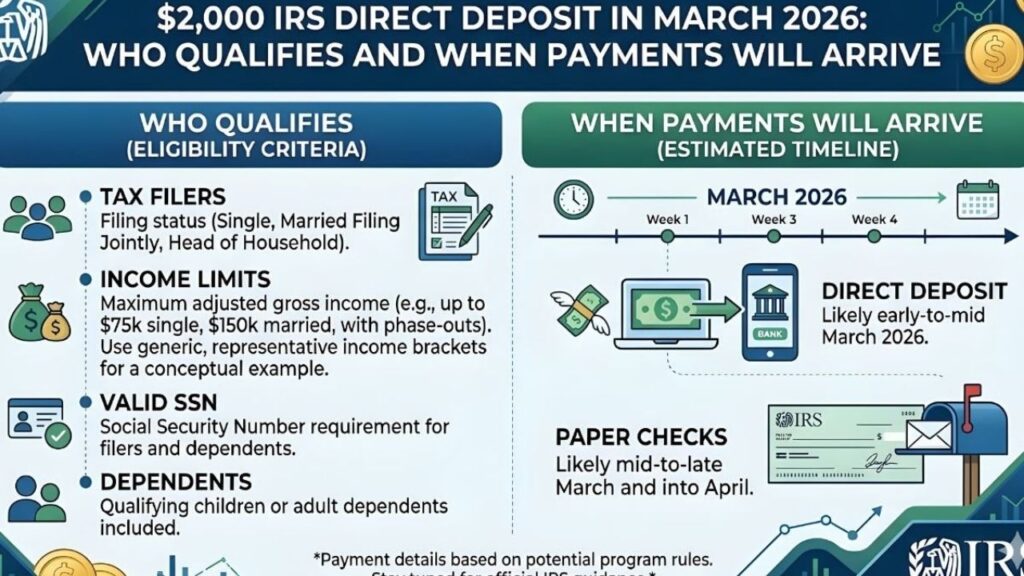

As the 2026 tax season progresses, many taxpayers across the United States are paying close attention to their expected refunds. Early reports and discussions among financial experts suggest that a noticeable number of people may receive refunds that approach or exceed $2,000.
However, experts emphasize that this increase is not the result of a new government stimulus program. Instead, it comes from the normal tax filing process for the 2025 tax year. Every year, the final refund amount depends on the difference between what taxpayers paid in taxes during the year and what they actually owed after calculating deductions and credits.
In simple terms, if more tax was withheld from a paycheck than the actual tax liability, the Internal Revenue Service returns the extra amount as a refund. For some households in 2026, this difference may be larger than expected.

Connection to the Tax Filing Season
The potential increase in refunds is closely linked to the current federal tax filing season. Each year, taxpayers file their income tax returns to determine whether they owe taxes or are due a refund. Adjustments to tax withholdings and the application of certain tax credits could lead to higher refund amounts for some households. Notably, credits such as the Earned Income Tax Credit and the Additional Child Tax Credit have a substantial impact on increasing refund amounts for qualifying families. When applied accurately, these credits can result in higher payments compared to previous years.
Why some refunds may be larger this year
Tax professionals say that several financial factors can contribute to larger refunds in 2026. One of the most important reasons is the way taxes were withheld from paychecks during the previous year.
Many employers adjust withholding rules based on updated tax guidelines. If too much tax was withheld from an employee’s paycheck, the difference will be returned when the tax return is filed.
Latest Stories
 $2,000 IRS Payment Coming in March 2026, What Taxpayers Must Know Before Expecting a Deposit
In addition, various tax credits designed to support working families can significantly increase the total refund amount. When taxpayers qualify for these credits, the final calculation may result in a higher payment from the IRS.
Because tax credits directly reduce the amount of tax owed, they can sometimes lead to refunds that are higher than expected.
Factors Influencing Larger Refunds
Several factors can affect the size of a tax refund. Primarily, if a taxpayer had more money withheld from their paycheck throughout the year than they owed in taxes, the IRS refunds the difference. Furthermore, tax credits designed to assist working families can significantly boost the final refund amount. For some households, the combination of precise filing, beneficial tax credits, and updated withholding rules could lead to refunds nearing $2,000 or more.
Latest Stories
 IRS Tax Refund 2026: How to Track Your Payment, Expected Timelines and What to Do if Your Refund Is Delayed
The role of the Earned Income Tax Credit
One of the most important credits that can increase refunds is the Earned Income Tax Credit. This program is designed to support low- and moderate-income workers by reducing the amount of tax they owe.
For families with children, the credit amount can be quite significant. In many cases, it not only eliminates the tax owed but also creates a refund payment.
Because of this credit, many working families may see larger refunds during the 2026 tax season compared to previous years.
The EITC has long been considered one of the most effective tax programs for helping working households improve their financial stability.
Additional Child Tax Credit and family benefits
Another major factor that can increase refund amounts is the Additional Child Tax Credit. Families with qualifying children may receive additional financial support through this program.
The credit helps reduce tax obligations for parents and, in many cases, results in a refund payment even if the taxpayer owes little or no federal tax.
For households with multiple children, the impact can be even greater. When combined with other credits and deductions, the Additional Child Tax Credit can significantly raise the final refund amount.
This is one reason why some families could receive refunds close to $2,000 or more during the 2026 filing season.
Eligibility for Higher Refunds
Eligibility for larger refunds generally depends on several factors, including income level, filing status, and qualification for specific tax credits. U.S. citizens and legal residents with valid Social Security numbers typically receive processing priority for tax refunds. Those who meet the income requirements for programs like the Earned Income Tax Credit may experience the most substantial benefits. Conversely, individuals with unresolved tax issues, unfiled returns, or fraud alerts on their accounts might face delays or reduced payments.
How income and filing status affect refunds
Income level plays a major role in determining eligibility for many tax credits. Individuals with moderate or lower incomes are often more likely to qualify for programs like the Earned Income Tax Credit.
Filing status is another important factor. Whether someone files as single, married filing jointly, head of household, or another category can influence the calculation of deductions and credits.
For example, families filing jointly may qualify for higher credit limits compared to individuals filing alone.
These factors work together to determine the final tax liability and, ultimately, the refund amount.
Processing and Timing of Refunds
Most taxpayers who file electronically and opt for direct deposit usually receive their refunds within approximately 21 days after the IRS accepts their return. March often becomes a pivotal month for refund deposits, as many people file their taxes early in the year. However, paper returns may take longer to process, sometimes extending up to six to eight weeks. Taxpayers can monitor their refund status using the official IRS “Where’s My Refund?” tool available on the IRS website.
Why electronic filing speeds up refunds
Electronic filing has become the preferred method for submitting tax returns in the United States. The IRS strongly encourages taxpayers to use its e-file system because it reduces paperwork and speeds up processing.
When a return is filed electronically, it enters the IRS system immediately. Automated systems then review the information and begin the processing procedure.
If no errors or missing details are detected, the refund can move quickly through the system and be approved for payment.
This is why taxpayers who file electronically and choose direct deposit often receive their refunds much faster than those who submit paper forms.
Direct deposit vs mailed checks
Taxpayers typically have two options for receiving their refunds: direct deposit or a paper check sent through the mail.
Direct deposit is considered the fastest and most secure method. Once the IRS approves the refund, the money is transferred directly to the taxpayer’s bank account.
Paper checks, however, must go through printing and mailing processes, which can add additional waiting time. Depending on postal delivery schedules, it may take several extra days or weeks for the check to arrive.
Because of these delays, many taxpayers now choose direct deposit as their preferred payment method.
The Importance of Accurate Information
To prevent delays, taxpayers should ensure that their personal information, bank account details, and tax forms are accurate before submission. Errors such as incorrect Social Security numbers or missing documents can slow down processing times. Individuals with complex tax situations should take extra care in verifying their information before filing.
Avoiding common filing mistakes
Tax experts often recommend reviewing every detail on a return before submitting it. Even small mistakes can trigger delays in processing.
For example, incorrect Social Security numbers, wrong bank account details, or missing forms can cause the IRS to pause the review process.
Using reliable tax software or consulting a qualified tax professional can help reduce the risk of such errors.
Careful preparation ensures that the return moves smoothly through the IRS system and that refunds are issued without unnecessary delays.
Staying informed through official IRS tools
Once a tax return has been submitted, taxpayers can track their refund status through the official IRS tracking tool called “Where’s My Refund?”
This tool allows individuals to check whether their return has been received, approved, or sent for payment. The system updates regularly, usually once every 24 hours.
To access the information, taxpayers need their Social Security number, filing status, and the exact refund amount listed on their tax return.
By using official IRS tools instead of relying on rumors or social media claims, taxpayers can stay accurately informed about their refund progress.
FAQs
1. Is the $2,000 tax refund in 2026 a new stimulus payment?
No, the potential $2,000 refund is not a stimulus payment. It comes from the normal tax refund process for the 2025 tax filing year.
2. Who may qualify for a larger tax refund in 2026?
Taxpayers who qualify for credits such as the Earned Income Tax Credit or the Additional Child Tax Credit may receive larger refunds.
3. How long does it take to receive an IRS tax refund?
Most electronic filers who choose direct deposit receive their refund within about 21 days after the IRS accepts their return.
4. How can I check the status of my tax refund?
You can check your refund status using the official “Where’s My Refund?” tool available on the IRS website.
5. What mistakes can delay a tax refund?
Common issues include incorrect Social Security numbers, missing documents, wrong bank details, or calculation errors on the tax return.