Over the past few weeks, conversations about a possible $2,000 payment from the Internal Revenue Service have gained strong attention across the United States. Social media platforms, online blogs, and community forums have been filled with posts claiming that the federal government is preparing to send out a new round of payments to millions of Americans.
These posts have raised excitement among some people who believe the payment could provide financial relief during a time when many households continue to manage rising living costs. At the same time, the rumor has also caused confusion because many individuals are unsure whether the payment is real or simply misinformation circulating online.
Financial experts and tax professionals have stepped forward to clarify the situation. According to them, there has been no official confirmation of a universal $2,000 payment being issued by the federal government in March 2026.
Latest Stories
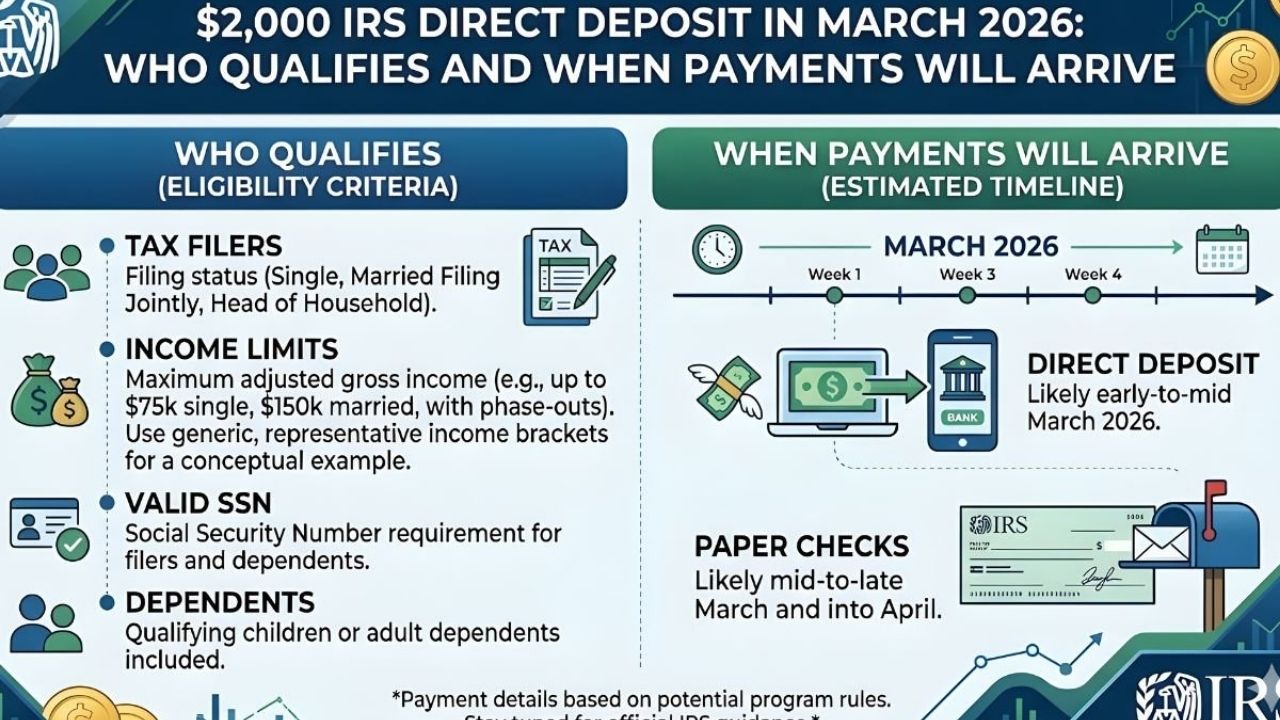
 $2,000 IRS Payment Coming in March 2026, What Taxpayers Must Know Before Expecting a Deposit
The confusion largely stems from misunderstandings related to tax refunds during the annual filing season.
How social media amplified the payment rumor
The speed at which information spreads online has made it easier for rumors to gain momentum. A single claim shared on a popular social media platform can quickly reach thousands or even millions of users.
In the case of the $2,000 payment rumor, many posts appear to have misunderstood normal tax refunds as a new government stimulus payment. When individuals share screenshots of deposits or discuss receiving refunds around $2,000, others may assume that a nationwide payment program has been announced.
Latest Stories
 Up to $2,000 IRS Tax Refund in March 2026, What Millions of Americans Need to Know Before Filing
Once such posts gain attention, they are often copied and reposted across multiple websites and channels, making the claim appear more credible than it actually is.
However, financial authorities emphasize that taxpayers should always rely on official government announcements rather than social media claims when it comes to federal payments.
No New Federal Stimulus Program Announced
The United States government has not introduced any new stimulus legislation aimed at providing a $2,000 payment to every citizen. The last time nationwide stimulus checks were distributed was during the COVID-19 pandemic, with the final round issued in 2021. Since then, Congress has not approved any similar initiatives. Without new legislative action, the IRS is unable to issue universal stimulus payments. Consequently, many reports regarding a $2,000 payment are based on misunderstandings or mere speculation.
Latest Stories
 IRS Tax Refund 2026: How to Track Your Payment, Expected Timelines and What to Do if Your Refund Is Delayed
Remembering the pandemic stimulus payments
Many Americans still remember the financial relief payments that were distributed during the COVID-19 pandemic. At that time, the federal government introduced several rounds of stimulus checks to support households facing economic hardship.
Those payments were made possible through emergency legislation passed by Congress. Each round of stimulus payments required approval through the legislative process before the IRS could distribute funds to eligible individuals.
The final round of those payments was issued in 2021. Since then, there has been no new nationwide stimulus program approved by Congress.
Because stimulus payments require formal legislative approval, the IRS cannot simply issue new payments without government authorization.
Why Some People Are Receiving Deposits
During the 2026 tax season, many taxpayers are noticing deposits in their bank accounts. In most cases, these payments are simply regular tax refunds for the 2025 tax year. The amount of a tax refund depends on various factors, including income, the amount of tax withheld during the year, and eligibility for certain tax credits. Because the average refund amount often hovers around $2,000 for some taxpayers, it can lead to confusion and the mistaken belief that a new government payment is being issued.
The link between tax season and refund deposits
Every year, the federal tax season begins when taxpayers submit their income tax returns to the IRS. These returns report income earned during the previous year and calculate the final tax liability.
If taxpayers paid more tax during the year than they actually owed, the IRS returns the extra amount as a refund. These refunds are usually issued through direct deposit or mailed checks.
Because millions of people file their tax returns around the same time, refund payments often appear in bank accounts during February and March.
This timing explains why many people are seeing deposits during March 2026.
Why some refunds are close to $2,000
One reason the rumor about a $2,000 payment gained attention is that many taxpayers receive refunds around that amount. The average federal tax refund in recent years has often been close to $2,000 for many households.
However, refund amounts are not fixed. Some individuals receive smaller refunds while others receive larger ones.
The amount depends on income levels, withholding amounts, deductions, and eligibility for tax credits.
When someone shares online that they received a refund close to $2,000, it can lead others to believe that the government is sending the same payment to everyone.
In reality, each refund amount is calculated individually.
How Tax Refunds Are Calculated
Tax refunds are not uniform amounts and vary from individual to individual. The final refund depends on the total tax withheld from a person’s paycheck during the year versus how much tax they actually owe. Credits such as the Earned Income Tax Credit and the Child Tax Credit can also increase the size of a refund. As a result, some individuals may receive refunds close to $2,000, while others may receive smaller or larger amounts depending on their specific financial situation.
The role of tax credits in increasing refunds
Tax credits can significantly increase the amount of money a taxpayer receives as a refund. Unlike deductions, which reduce taxable income, credits directly reduce the amount of tax owed.
Two of the most widely used credits are the Earned Income Tax Credit and the Child Tax Credit.
The Earned Income Tax Credit is designed to support working individuals and families with moderate or lower incomes. This credit can sometimes eliminate the tax owed and produce a refund payment.
The Child Tax Credit provides financial relief to families with qualifying children.
When these credits are applied together, they can increase refund amounts substantially.
Typical Refund Processing Timeline
The IRS typically processes most electronic tax returns within about 21 days after they are accepted. Taxpayers who file electronically and opt for direct deposit usually receive their refunds more quickly. Returns that include credits like the Earned Income Tax Credit may take longer because the IRS conducts additional verification checks to prevent fraud. For many people who file returns in late February, refunds may appear in their bank accounts between mid-March and the end of March.
Why electronic filing speeds up refunds
Electronic filing has become the most common way to submit tax returns in the United States. The IRS e-file system allows taxpayers to send their information directly to the agency through secure online platforms.
One major advantage of electronic filing is speed. Returns submitted online enter the IRS processing system immediately.
Most electronic returns are processed within about three weeks, especially when there are no errors or missing documents.
Because of this efficiency, taxpayers who file electronically often receive refunds much faster than those who submit paper returns.
Direct deposit versus mailed refund checks
After a refund is approved, the IRS must deliver the payment to the taxpayer. The two most common methods are direct deposit and paper checks.
Direct deposit sends the refund directly to a taxpayer’s bank account. This method is faster and more secure than waiting for a mailed check.
Paper checks, on the other hand, require printing and postal delivery, which can add several extra days to the process.
For this reason, many taxpayers choose direct deposit when filing their tax returns.
Avoiding Online Scams and Misinformation
Whenever rumors about government payments circulate online, scammers often exploit the situation. Some messages claim to assist people in accessing a $2,000 payment in exchange for personal details or fees. These messages are typically fraudulent. It is important to note that the IRS does not contact taxpayers via unexpected emails, texts, or social media messages requesting personal information.
How scammers target taxpayers during tax season
Tax season is one of the most active times of the year for financial scams. Fraudsters often take advantage of public interest in tax refunds and government payments.
They may send fake messages claiming that taxpayers must provide personal details to receive a refund or stimulus payment.
These messages can appear convincing, often using official-looking logos or language.
However, the IRS has repeatedly warned that it does not request personal information through unexpected emails or text messages.
Anyone receiving such communication should avoid responding and report the message through official channels.
Using official IRS tools to verify refund status
Taxpayers who want accurate information about their refunds should rely only on official IRS tools.
One of the most widely used tools is the “Where’s My Refund?” feature available on the IRS website.
This system allows taxpayers to check whether their return has been received, approved, or sent for payment.
The tool usually updates once every 24 hours and provides reliable information about refund progress.
By using official resources instead of relying on rumors, taxpayers can avoid confusion and stay informed throughout the tax season.
FAQs
1. Is the IRS sending a $2,000 payment to all Americans in March 2026?
No. There is no official announcement of a universal $2,000 payment. Most deposits around that amount are regular tax refunds.
2. Why are some taxpayers receiving deposits close to $2,000?
Refund amounts depend on income, tax withholding, and eligibility for credits such as the Earned Income Tax Credit and Child Tax Credit.
3. When will most tax refunds arrive during the 2026 tax season?
Most electronic returns are processed within about 21 days, so many refunds appear between mid-March and late March.
4. How can I check the status of my IRS refund?
You can track your refund using the official “Where’s My Refund?” tool on the IRS website.
5. How can taxpayers avoid scams during tax season?
Taxpayers should ignore unsolicited emails or messages claiming to offer government payments and rely only on official IRS communication.